
How to Choose the Perfect Color for Custom Furniture (Without Stains)
The Great Color Debate: Why I Let the Wood Do the Talking
If we were to sit down and design a custom piece of furniture together, we would eventually hit “The Big Question.” It’s the moment that causes the most hesitation and head-scratching for almost everyone I work with:
“What color should it be?”
I get it! You want this piece to match your floors, your cabinets, or that antique table you inherited from your grandmother. Walking into a hardware store and staring at a wall of 50 different little cans of stain can feel overwhelming.
But here is a secret from the sawdust-covered side of the bench: The best color usually isn’t in a can—it’s in the tree.
The Trouble with Stains
In commercial furniture manufacturing, factories often use heavy stains and toners to make a piece of cheap poplar look like expensive mahogany. It works, but it often hides the grain, the character, and the life of the timber.
For custom woodworking, relying on stains can be tricky because wood is a natural material. It’s unpredictable.
- Absorption varies: Two boards from the same tree might soak up a “Dark Cherry” stain differently, leaving one darker than the other.
- Blotching: Some woods, like Maple or Pine, can get splotchy and uneven when stained.
- Masking beauty: A heavy stain often covers up the chatoyance (that shimmering, 3D quality) that makes real wood so special.
A Better Approach: Choosing the Species, Not the Stain
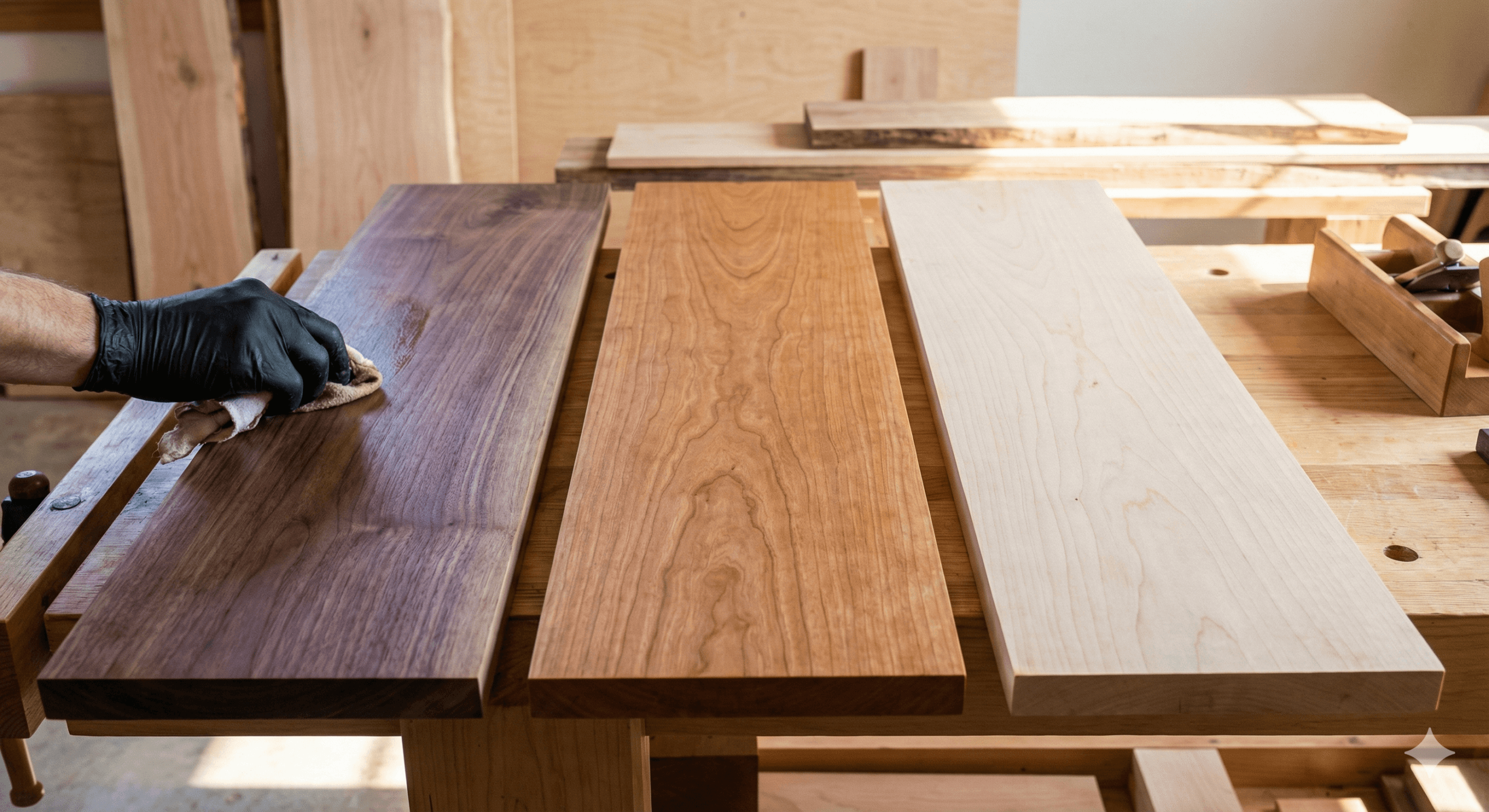
Instead of forcing a piece of light wood to look dark, my philosophy is simple: pick a wood that is naturally the color you want.
When we stick to the natural color of the timber, you get a depth and warmth that no chemical stain can replicate.
- Looking for Dark and Moody? Let’s look at Black Walnut. It has rich chocolates, purples, and tans that age gracefully over time.
- Want Bright and airy? Maple or Ash are perfect choices. They are naturally pale, creamy, and reflect light beautifully.
- Want Warm and Red? Cherry starts as a light pinkish-brown and naturally deepens to a gorgeous russet red as it is exposed to sunlight.

My Secret Ingredient: Rubio Monocoat
Once we pick the right species, I don’t just leave it raw. I need to protect it. At this point in time my finish of choice is a product called Rubio Monocoat 2C Pure. (Rubio MonocoatRubio Monocoat)
Unlike thick polyurethanes that put a plastic shell on top of the wood, Rubio bonds with the wood fibers. It keeps the natural feel of the timber while making the grain “pop.” It doesn’t change the color; it just turns the volume up on what nature already put there.
How You Can Help Yourself (And Your Woodworker!)
If you are getting ready to commission a piece, here are a few tips to help you navigate the color selection process:
- Look at “Clear Coat” Examples: When browsing Pinterest or Instagram, search for “Natural Walnut Table” or “Clear Maple Desk.” This will give you a realistic idea of what the wood looks like without artificial dyes.
- Bring Samples to the Light: If I give you a wood sample, don’t just look at it in your kitchen at night. Look at it in the morning, near a window, and under your lamps. Natural wood changes personality depending on the lighting.
- Embrace Variation: Remember that wood is organic. The slight variations in color and grain are proof that your furniture was made by hands, not machines.
Let’s Build Something Real
By choosing the right species and using a high-quality, clear finish, we ensure your furniture looks authentic and ages beautifully. You aren’t just picking a color; you’re picking a material that tells a story.
Ready to start talking about your next project? Let’s pick some wood!
Have an idea in mind?